

Wise County, Texas
Where the Metroplex Meets the Prairie — and Growth Is Accelerating
- Population
- ~88,000 (2026 est.), growing at 3.8% annually
- County Size
- 922 square miles
- Price/Acre
- $26,000–$40,000 (varies by location and tract size)
- Active Listings
- 800+ properties across 12,000+ acres
- Avg. Listing Price
- $607,000
- County Seat
- Decatur
Why Wise?
Wise County is one of the fastest-growing corners of North Texas, and it's still early enough in the growth curve to buy ahead of it. The county's population has leaped more than 18% since the 2020 Census, from 68,632 to an estimated 88,000, with thousands of additional homes in the development pipeline across the prairie that flanks US 287.
The growth isn't random. Wise County sits directly northwest of Fort Worth, and as the Metroplex expands westward and northward, the county's southern tier — Rhome, New Fairview, Boyd, and Newark — is absorbing the same development pressure that transformed Denton County a decade ago. The 4,000-home Ranchland development near New Fairview, recently purchased by Lennar Homebuilders, is one of several master-planned communities reshaping south Wise County.
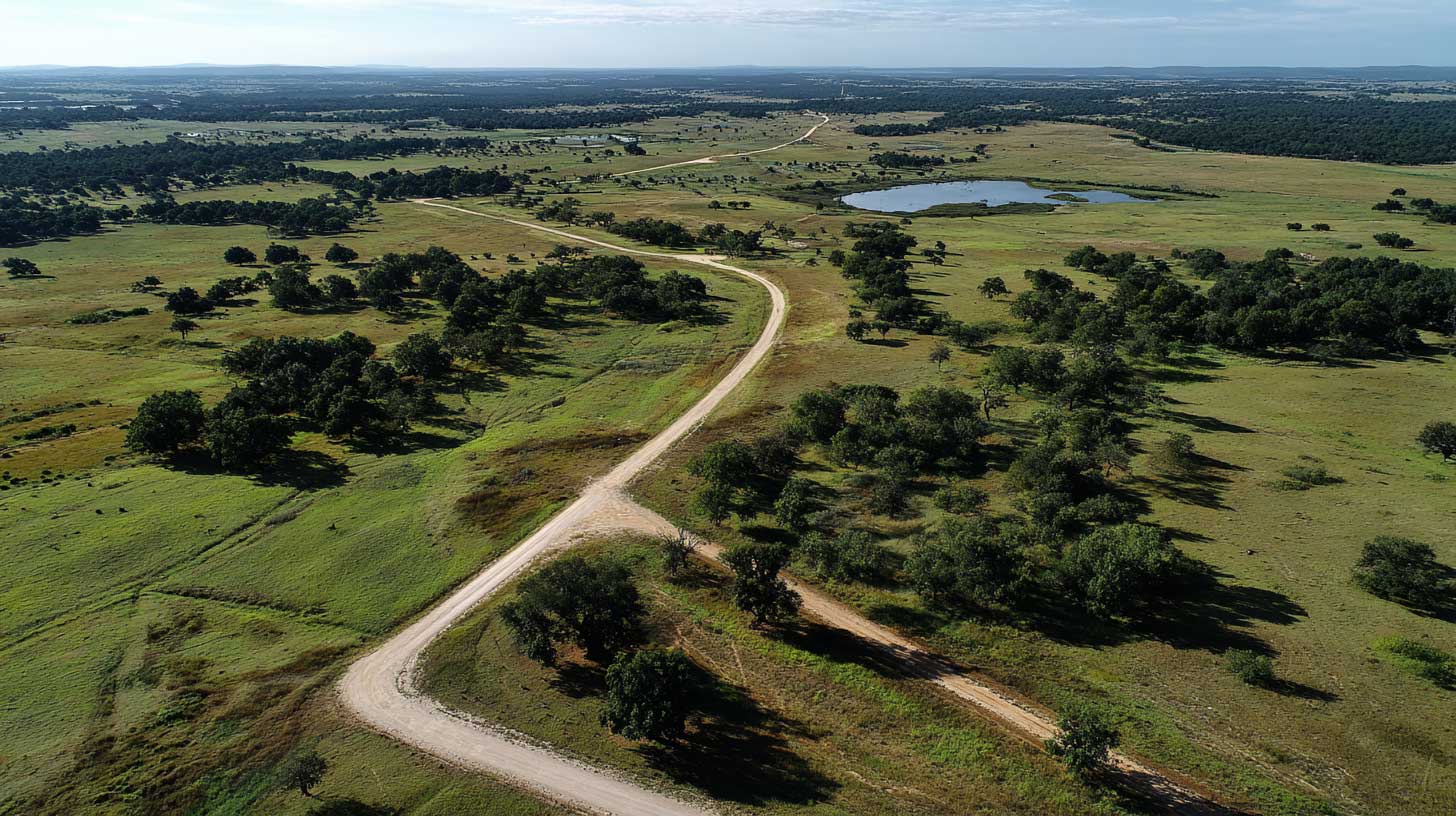
But Wise County isn't just suburban spillover. Head north past Decatur and you're in true ranch country — rolling prairies, hardwood creek bottoms, and livestock operations that have defined the landscape for generations. Bridgeport and Lake Bridgeport offer lakefront recreation. Alvord, Chico, and Paradise provide small-town Texas living with acreage availability that's increasingly rare this close to a major metro.
The county's defining tension — and its biggest investment opportunity — is the collision between rapid southern growth and the vast rural landscape to the north and west. Buyers who understand where the growth corridor is heading, and what land sits in its path, are positioned to capitalize on a transformation that's already underway.
Market Snapshot
Wise County's land market is split into two distinct zones. The southern third, from the Tarrant County line up through Rhome, Boyd, and New Fairview, is priced like suburban development land. The northern two-thirds, from Decatur through Bridgeport, Alvord, and Chico, remains rural ranch country with substantially lower per-acre pricing.
Price Ranges by Location and Use
In south Wise County — Rhome, New Fairview, Newark, and portions of Boyd — small acreage tracts are commanding $40,000–$80,000+ per acre as master-planned developments absorb available land. These areas are functionally an extension of the Tarrant County suburban market. Northwest ISD and portions of Krum ISD serve this area, adding school district premium to land values.
The Decatur corridor along US 287 and US 380 represents the county's commercial and institutional center. Land here ranges from $20,000–$45,000 per acre depending on road frontage, utilities, and zoning. Decatur's population has grown 30% since 2020, and the city's Comprehensive Plan 2050 is actively guiding development.
North and west of Decatur — Bridgeport, Alvord, Chico, Paradise — you're in ranch and recreational territory. Larger tracts (50+ acres) range from $8,000–$20,000 per acre depending on improvements, water features, and access. Lake Bridgeport frontage commands a significant premium. Properties with creeks, ponds, and mature hardwood cover trend toward the higher end.
LandSearch reports an average price of $39,603 per acre across all Wise County listings, with 807 active properties. Acres.com shows a median sold price of $26,260 per acre based on recent closed transactions. The gap between listing prices and sold prices reflects a market with more inventory than the hottest Collin or Denton County corridors — buyers have negotiating room, especially on larger tracts.
Demand Indicators
Wise County's growth rate of 3.8% annually puts it among the top-performing counties in Texas for population expansion. The development pipeline is deep: Reunion, Bluestem, Northstar, and Ranchland are all adding hundreds of homes in the southern tier. As these developments bring population, retail, schools, and infrastructure follow — each of which increases adjacent land values.
Land Types Available
Residential Development Tracts (South Wise)
The most active segment. Small-to-mid acreage (5–50 acres) in the Rhome/New Fairview/Boyd corridor is being assembled and entitled for residential development. Proximity to the Tarrant County line, Northwest ISD boundaries, and US 287 access are the primary value drivers.
Ranch and Agricultural Land
Wise County has deep agricultural roots. Working cattle ranches, hay operations, and mixed-use ag tracts dominate the landscape north of Decatur. Properties with improved pasture, cross-fencing, working pens, and water infrastructure command premiums over raw land. Native grass prairies and post oak savannah characterize much of the western county.
Recreational and Lake Property
Lake Bridgeport is the county's primary recreational asset — a 12,000-acre reservoir on the West Fork of the Trinity River. Lakefront properties, lake-view tracts, and acreage near Runaway Bay attract recreational buyers and retirees. The county's creek bottoms and wooded areas also support hunting (whitetail deer, wild turkey, feral hog) and fishing.
Commercial and Highway Frontage
US 287, US 81, and US 380 provide commercial frontage opportunities. The intersection of these corridors near Decatur is the county's commercial heart. As growth pushes north from Fort Worth, highway-visible tracts along these routes are increasing in value.
Small Acreage Homesites (Rural Residential)
5–20 acre tracts outside city limits remain available throughout the county. These appeal to buyers wanting elbow room, livestock capability, and rural character without the price of south Wise development land. Many offer ag exemption eligibility.
Zoning & Land Use
Unincorporated Wise County
Like most Texas counties, Wise County has no county-wide zoning authority outside of city limits and ETJs. Land in unincorporated areas can generally be used for residential, agricultural, or commercial purposes without zoning approval. This flexibility is a major draw for buyers — but it also means your neighbor can potentially develop their property in ways that affect yours.
Wise County does require septic system permits through the county health department. On-site sewage facility (OSSF) permits must be obtained before installing any new septic system, and soil evaluations are required.
City Jurisdictions
Within city limits and ETJs, zoning and subdivision regulations apply. The key jurisdictions:
Decatur has a comprehensive zoning ordinance (adopted 2015) and a Comprehensive Plan 2050. The city's Planning Division oversees subdivision platting, building permits, and zoning changes. Decatur's ETJ extends several miles from city limits and carries subdivision authority.
Bridgeport has subdivision and zoning ordinances governing development within its city limits and ETJ. Plat requirements include engineering standards, utility provisions, and digital submission requirements.
Rhome, Boyd, New Fairview, and the smaller south Wise cities each have their own development regulations, many of which are being updated rapidly as growth accelerates. Buyers planning development should verify current ordinances directly with each city, as these are changing frequently.
Subdivision Rules
In unincorporated Wise County, the county's subdivision regulations govern the division of property into smaller tracts. Texas counties have subdivision authority over tracts under 10 acres. Dividing a larger property into lots under 10 acres triggers county platting requirements, including road access, drainage, and utility provisions. Tracts 10 acres and larger can generally be sold without county approval if they have road frontage.
Water & Utilities
Water — The Critical Issue
Water availability is Wise County's most important infrastructure challenge and the factor that will shape development patterns for the next two decades. A 2023 Upper Trinity Groundwater Conservation District study found that the county's groundwater demand is unsustainable at current growth rates.
Lake Bridgeport is the primary surface water source. Owned and operated by Tarrant Regional Water District (TRWD), the 12,000-acre reservoir was built in 1931 on the West Fork Trinity River. Decatur has an allocation of 4,000 acre-feet per year from Lake Bridgeport and currently uses roughly half that amount.
South Wise cities — Rhome, Boyd, New Fairview, and Newark — face the most acute water pressure. These rapidly growing communities rely on groundwater and special utility district purchases, and several experienced water restrictions in 2024. Boyd residents were under Stage 2 restrictions for several months.
The Wise Regional Water District (WRWD) is being formed through state legislation (SB 1359/HB 3154 filed in the 2025 session) to address the long-term water supply problem. Participating cities include Alvord, Aurora, Boyd, Bridgeport, Decatur, New Fairview, Newark, Paradise, and Rhome. The WRWD would allow these cities to pool resources, negotiate water allocations from external sources (potentially East Texas), and access Texas Water Development Board funding for infrastructure like water treatment plants.
For land buyers, water due diligence in Wise County is non-negotiable. Before purchasing, verify: water source (city, well, or water district), current and projected capacity of the provider, any restrictions or moratoriums on new connections, and well water quality and quantity if relying on groundwater.
Water Districts and Providers
Multiple entities serve different parts of the county: Wise County Water Supply District (serves Decatur), West Wise Special Utility District (serves Bridgeport area), various MUDs in south Wise development areas, and private wells throughout rural areas. The patchwork nature of water service means no two properties necessarily have the same provider or availability.
Electricity
Oncor (the transmission/distribution utility) serves most of Wise County. CoServ Electric serves portions of the southern county near the Denton County line. Rural areas may require line extensions for new construction — get estimates early, as these can be significant costs.
Internet and Communications
Nextlink Internet (headquartered in Parker County) provides fixed wireless broadband to much of rural Wise County. Fiber availability is expanding, particularly near Decatur and the south Wise developments. AT&T and various wireless carriers provide cellular coverage, though rural areas in northern and western Wise County may have spotty coverage.
Roads and Transportation
US 287 is the primary north-south corridor, connecting Fort Worth through Decatur to Wichita Falls. US 81 runs parallel through Decatur. US 380 (east-west) connects Wise County to Denton and the broader North Texas network. FM roads provide access to rural properties throughout the county. There is no rail transit or commuter service — this is a car-dependent county.
Ag Exemptions & Property Taxes
Agricultural exemptions are widely used in Wise County and represent one of the most significant tax benefits for land buyers. The county's ag heritage means the Wise County Appraisal District (WCAD) is experienced with ag valuations, but buyers should still understand the requirements.
Qualifying Activities
Cattle grazing is the most common qualifying use. The general stocking rate guideline for Wise County is 1 animal unit per 15–25 acres depending on pasture quality, though specific rates should be verified with the WCAD. Hay production, goat/sheep operations, horse breeding (with commercial intent), and wildlife management plans also qualify.
Minimum Acreage
There is no statutory minimum acreage for ag exemptions in Texas, but as a practical matter, the WCAD evaluates whether the land is being used for genuine agricultural production at a level consistent with the area. Tracts under 10 acres face closer scrutiny. Most buyers in Wise County are working with larger acreages where qualification is straightforward.
Wildlife Management Exemptions
Wildlife management valuation is available as an alternative to traditional agricultural use. The property must have had an ag exemption in place (typically for at least one year), and the owner must implement a qualified wildlife management plan. Activities include habitat management, erosion control, predator management, supplemental food/water, shelter management, and census counts. This is popular on recreational properties and ranchettes where traditional ag may not be practical.
Rollback Taxes
If you purchase land with an existing ag exemption and change the use to non-agricultural (residential development, commercial, etc.), rollback taxes apply for the previous five years. The rollback equals the difference between the ag valuation tax and what taxes would have been at market value, plus 7% annual interest. On a 50-acre tract, rollback taxes can easily reach $25,000–$75,000+. Factor this into any development budget.
Timber Exemptions
Wise County has areas with enough post oak and hardwood cover to potentially qualify for timber valuation, though this is less common than traditional ag or wildlife management.
Growth & Development
Wise County's growth story is being written in real time. Understanding the trajectory helps buyers identify where value is being created — and where prices haven't caught up yet.
South Wise: The Development Frontier
The southern tier is where most residential construction is happening. Key developments include:
Ranchland (near New Fairview): 4,000 homes planned, recently acquired by Lennar Homebuilders, amendments being processed for lot design and community standards.
Reunion, Bluestem, and Northstar: Active developments in the Rhome/New Fairview area adding hundreds of homes to the market.
These developments are following the same pattern that transformed Trophy Club, Roanoke, and Keller a generation earlier — suburban expansion from the Tarrant County core, enabled by highway access and school district quality.
Decatur: The County Hub
Decatur (pop. 8,666, growing at 4.84% annually) is transforming from a small county seat into a regional center. The city's Comprehensive Plan 2050 envisions significant growth, and its historic square and downtown core provide a character that newer suburbs lack. Development pressure along US 287 and US 380 is creating commercial opportunities. Decatur ISD serves 3,811 students and is the county's largest district.
Northern Wise: The Value Play
Bridgeport, Alvord, Chico, and Paradise remain rural communities with limited development pressure. This is where land is most affordable and where buyers seeking agricultural or recreational properties have the most options. However, as south Wise absorbs development and prices rise, the affordability line will push northward — the same dynamic that pushed Collin County buyers into Grayson County.
Infrastructure Watch
The Wise Regional Water District legislation is the single most important infrastructure development to track. If formed, it would unlock water resources that are the current constraint on growth. Highway improvements along US 287 and US 380 are also in planning stages as traffic volumes increase.
Schools & Community
School Districts
Wise County is served by seven ISDs:
Decatur ISD (3,811 students): The county's largest district, serving Decatur and surrounding areas. Strong academics and athletics. New school construction underway to accommodate growth.
Bridgeport ISD (2,119 students): Serves Bridgeport, Lake Bridgeport, and surrounding rural areas. Solid community school with small-town character.
Paradise ISD (1,304 students): Serves Paradise and northern Wise County. Known for strong community involvement.
Boyd ISD (1,293 students): Serves Boyd and portions of south Wise County. Growing alongside the southern development corridor.
Alvord ISD (850 students): Small rural district serving Alvord and surrounding ranch land. Low student-to-teacher ratios.
Chico ISD (558 students): Serves the western portion of the county. Traditional rural Texas school community.
Slidell ISD (482 students): One of the smallest districts, serving the far northern county. Close-knit community feel.
Additionally, portions of south Wise County fall within Northwest ISD, Krum ISD, and Springtown ISD boundaries, which cross county lines.
Healthcare
Wise Health System (now part of Medical City) provides hospital services in Decatur. The Bridgeport hospital also serves the northern county. For specialized care, Fort Worth medical facilities are 35–55 minutes away.
Character and Community
Wise County retains a strong rural Texas identity. The Wise County courthouse square in Decatur is the community's social and commercial hub. Ranching, rodeo, and agricultural traditions remain central to the culture. The county's small towns each maintain distinct characters — Decatur's growing urbanism, Bridgeport's lake community, Alvord's ranch heritage, and Paradise's quiet rural life.
The growth in south Wise County is introducing new residents who bring suburban expectations — parks, retail, dining, and services. How the county manages the tension between its rural heritage and suburban future is an ongoing conversation.
Due Diligence Checklist
Before purchasing land in Wise County, investigate these critical factors:
Water availability and source. This is the #1 due diligence item in Wise County. Verify who provides water service (city, water district, or private well), confirm capacity for your intended use, check for any restrictions or moratoriums, and test well water quality and yield if relying on groundwater. Contact the applicable water provider directly — don't rely on the seller's assurances alone.
Flood zone status. Check FEMA flood maps, particularly near the West Fork Trinity River, Denton Creek, and their tributaries. Lake Bridgeport's floodplain extends beyond the normal shoreline. Flood insurance costs can significantly impact the economics of a property.
Road access and legal easements. Verify deeded road access, not just physical access. Many rural Wise County properties are accessed via county roads or private easements. Confirm the legal right to access, maintenance responsibilities, and whether the road can handle construction traffic if you're building.
Septic feasibility. In areas without city sewer, an on-site sewage facility (OSSF) permit is required. Soil testing must be completed before purchase to confirm the property can support a septic system. Clay soils in portions of Wise County can complicate conventional septic installations, potentially requiring aerobic systems at higher cost.
Ag exemption status and rollback exposure. Verify the current agricultural exemption status with the WCAD. If the property has an ag exemption and you plan to change use, calculate rollback tax liability before closing.
ETJ and development restrictions. Determine whether the property falls within any city's ETJ. Properties in ETJ areas may face subdivision restrictions, building setbacks, and utility requirements that don't apply in fully unincorporated areas.
Mineral rights. Wise County has historical oil and gas activity, particularly in the Barnett Shale formation. Verify whether mineral rights convey with the surface rights. Severed mineral rights mean someone else may have the right to access minerals beneath your property.
Survey. Get a current survey. Property lines in rural Wise County may not match fence lines, and easements (pipeline, utility, access) may not be obvious from a visual inspection.
Available Land in Wise County
Browse our current listings in Wise County. We'll help you find the perfect property.
Browse ListingsFrequently Asked Questions About Wise County
What's driving land prices up in Wise County?
Is Wise County a good land investment?
What are property taxes like in Wise County?
Can I build a barndominium or metal building home?
How far is the commute to Fort Worth?
What about natural gas/Barnett Shale activity?
Are there deed restrictions in rural areas?
Ready to Buy Land in Wise County?
Our team has deep expertise in Wise County properties. Let us help you find your perfect piece of land.
Contact Our Team